
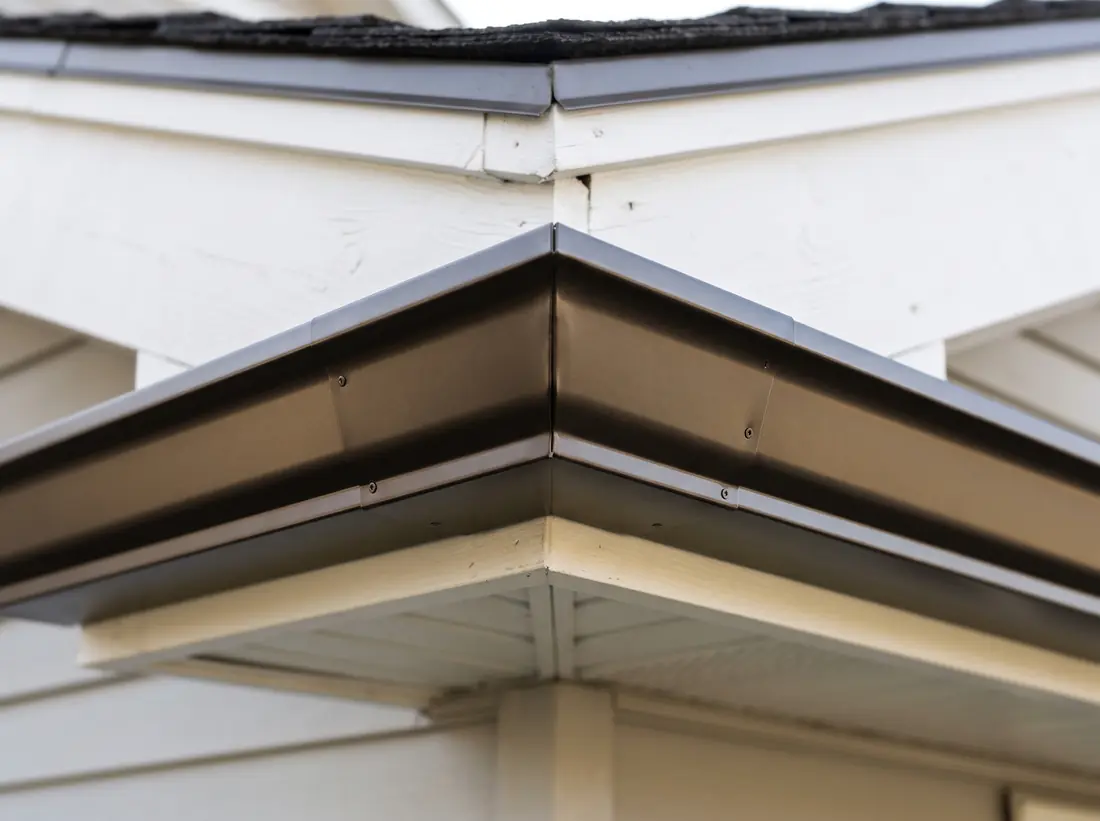
What to look for
Investigate leaks, loose fixings and damaged outlets before deciding which sections need replacement. Look from ground level for streaks on siding, water collecting at the base of a wall and changes in the shape of the channel. Note whether the problem occurs during ordinary showers or only a heavy downpour.
Options to discuss
- Leaking gutters: Identify whether the leak comes from a joint, corrosion, a blocked outlet or water behind the gutter.
- Sagging gutters: Standing water and loose hangers can indicate failed fasteners or deteriorated fascia.
- Downspout repair: Inspect crushed elbows, separated joints and blocked underground connections before replacing parts.
- Fascia and soffit: Soft wood or staining behind a channel may require carpentry before a gutter can be securely hung.
- Storm-damaged gutters: Check for detached runs, dents that restrict drainage and displaced downspouts after severe weather.
- Heavy-rain overflow: Overflow can result from undersized outlets, poor pitch, roof valleys or accumulated debris.
A property-specific inspection
Ask the provider to check the roof catchment, outlet sizes, fascia condition and where downspouts discharge. A quote should distinguish materials, labor, disposal, access equipment and any additional work discovered during inspection. Agree on how changes to the scope are approved.
Atlanta conditions
Atlanta Watershed Management describes local stormwater challenges from intense rain. The aim of roof drainage is to manage runoff on the property, not to prevent neighborhood flooding. Check whether discharge or alterations require local approval.
Diagnose before sealing
A leak at a corner may be a failed seal, but overflow from a blocked outlet can look identical from the ground. Ask for an inspection of the channel, end caps, joints, hangers and roof edge. Rust perforation or a split in the metal needs a different solution from loose fasteners.
Compare a localized repair with replacement of the affected run. If the surrounding material is sound, a repair may make sense. If several fasteners have pulled out or the fascia is soft, surface sealant will not solve the structural problem.
Before you authorize the project
Georgia distinguishes specialty work from general contracting. Review the Georgia consumer protection guidance and confirm the requirements for the actual scope. Ask who is responsible for property protection, cleanup, changes to the estimate and any follow-up work.